
oee.ai helps to increase the OEE of systems. The technology is built around the basic idea of maximum operational flexibility. In addition to technology, people are also needed to implement the identified measures. But how do people and technology work together to increase OEE? This user report is intended to exemplify how it can be done.
OEE increase through KAIZEN workshops
In many companies, the KAIZEN or KVP workshop has proven effective in increasing productivity. This format was also chosen for this engagement. A process engineer from the company guides a group of employees through the workshop. In our example, it is a company in the fast moving consumer goods industry.

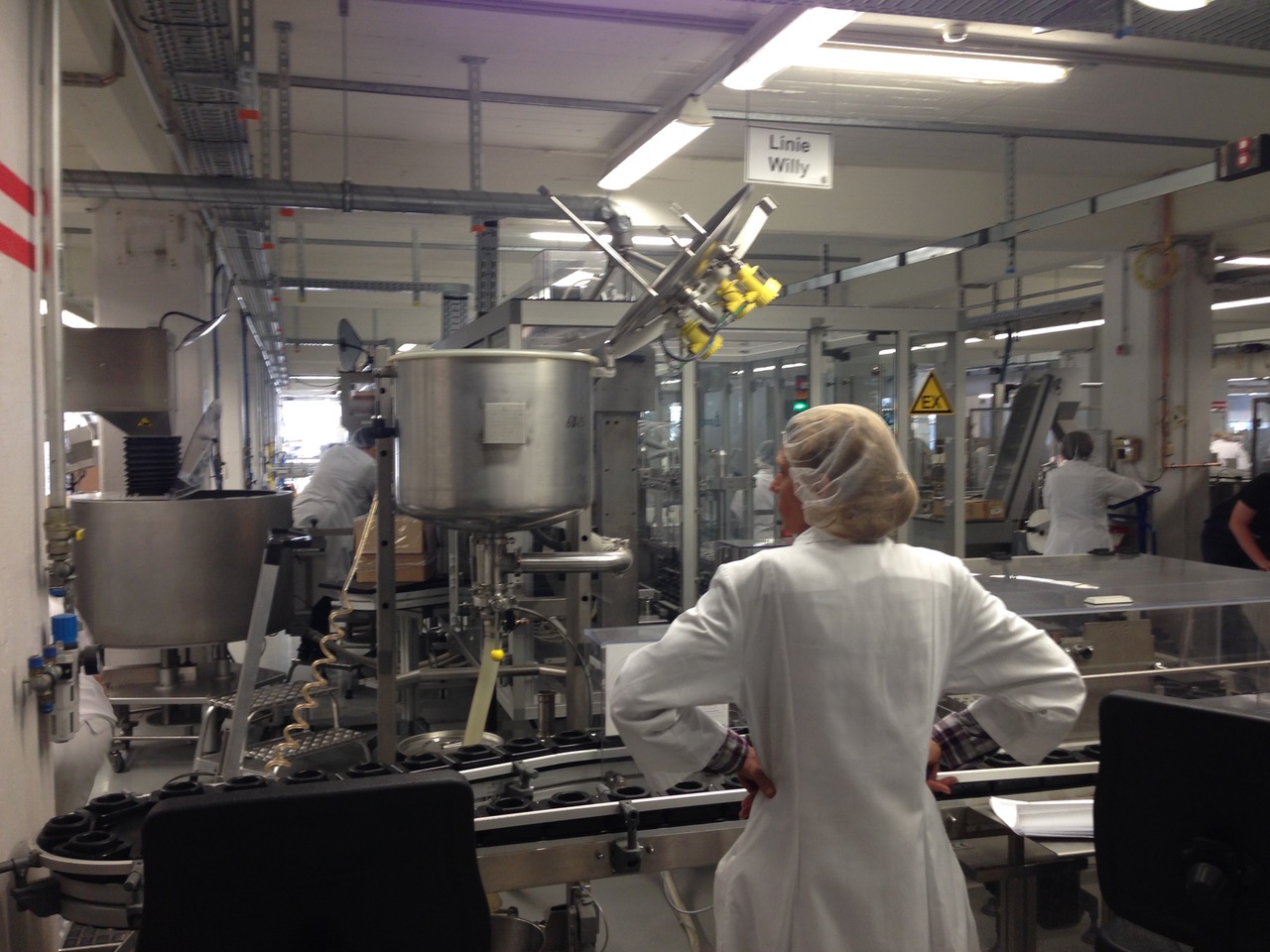
The workshop takes place in the area where the product is bottled and packaged in one of the last production steps — a bottling plant with a chain of systems such as a bottler, a cap attachment, a cartoner, a celophanizer and a final packaging.
The workshop with the employees lasted 4 weeks and was divided into 3 phases:
- Analysis of the initial situation
- Carrying out the optimizations
- Validate optimizations
The activities of the individual phases are shown in the following graph.

The length of the phases is fundamentally dependent on the scope of the task. However, the above format has proven effective for classic KAIZEN workshops to increase OEE.
OEE analysis with oee.ai
At the end of the analysis phase, the data situation was as follows:
The analysis was carried out in 2-shift operation within a working week of 5 days. In that time, over 110,000 products were manufactured on the plant.

OEE stood at 46.6% during the analysis period — a relatively low figure. The availability factor (downtimes greater than 5 minutes) was over 70%. Although the value is not extremely good, it is better than the power factor of around 65% — this meant that a possible focus of the optimizations was on power losses, i.e. speed reductions and short shutdowns.
One more sentence about the quality factor: Although a separate Q sensor was connected to the system, the losses were in the region of the second decimal place — no action required.
Detailed analysis of Microstop losses
First, let's look at the availability factor in detail: All downtimes longer than 5 minutes were assigned fault reasons using tablets temporarily installed on the system. The following overview shows the number and duration of shutdowns of less than 5 minutes, the so-called microstops. The number per shift fluctuated significantly, but this may also have something to do with the production program. That is no longer worrying.

The average shift has around 10 microstops lasting less than 20 minutes. That is around 4% of production time per shift — meaning that this loss was not the focus of attention at the moment.
In summary, it can be said that the selected 5 minute limit represents a sufficient accuracy of the analysis for the current situation at the plant. In future, it will be possible to further reduce the border. For the moment, however, she was cleverly chosen.
Detailed analysis of OEE availability factor
Let us now turn to the availability factor: The availability losses lasting 5 minutes or greater were stored on the system via a tablet with reasons for malfunction. For the week under review, there were approximately 17 hours of disturbances in this category.
Of the 17 hours, no faults were assigned for 2:50 hours, or 16% of the time. The lower this time percentage, the more meaningful the analysis is. In the period considered here, this value is still okay; a conversation with plant personnel about the importance of fully recording the reasons for the fault could still be conducted.

The biggest loss, both in terms of frequency and duration, came from the “setup or format change” category. It was set up about once per shift and it took an average of 28 minutes. This was obviously a major lever for optimization approaches.
The next 3 aggregates were approximately the same in terms of their interference components. Here, it will be difficult to quickly achieve a measurable improvement. This does not mean that you should neglect these causes of interference. However, with the same effort elsewhere, you can probably make more contribution to improvement. As a possible approach in this group of aggregates, the data identified the labeler. With 11 individual defects within 10 layers, the poorly glued labels accounted for a relatively large proportion of the number of overall defects. A detailed examination of the causes is certainly worthwhile here.
One last comment on organizational disruptions: This category of disturbances often accounts for a large proportion of OEE losses. But not in our operational environment described here. The planning and logistics around the plant worked well and offered little room for improvement.
Detailed analysis of OEE power factor
In the analysis, the performance factor showed a higher optimization potential than the availability factor. Let's look at the details:
The recording limit was chosen very generously. In the configuration used here, a fault reason was only queried when the system was running at less than 70% of the target output for more than 15 minutes. With a cycle of 60 bottlings per minute, the system therefore lost at least 270 (= 60 units). /Min* (1 — 0.7) * 15 minutes) Bottling before a fault has been requested.
Despite this generous configuration, over 28 hours accumulated at the end of the week, driving at less than 70% of the speed for longer than 15 minutes. Experience has shown that if the recording limit were to be tightened, this figure would rise significantly again. So it was okay to choose this configuration to start optimization.

During the analysis period, the bottler experienced the most intensive disturbances, both in absolute terms and in terms of duration. A clear starting point for optimising the power factor was the jammed pumps on the bottler. If this problem could be optimized through a different supply, a different attachment concept, the procurement of other pumps or similar measures, the biggest obstacle to a better OEE of the system was attacked.
All other aggregates are of secondary importance for optimization in terms of performance losses. If there is still capacity available for optimization projects, the installation of the spray heads on the star machine could be processed. This is an individual fault which reduces the filling speed for an average of 30 minutes when it occurs.
Implementation of the first round of optimization
On the basis of the analysis, the KaiZen workshop mentioned above was carried out. Within 2 weeks, the two top OEE loss reasons were worked on:
- Setup or format change: A classic topic for an SMED (Single Minute Exchange of Dies) workshop. The workshop team analysed the set-up process in detail, identified potential for optimization, practiced the new procedure with the employees and documented it as a standard.
- The pump is stuck on the bottler: Here, two maintenance engineers have designed, implemented and tested a new pump supply system in parallel.
The results of the two sub-teams were presented to management and employees as part of workshop presentations and then implemented.
After 2 weeks of gaining experience with the changes, the validation phase of the KAIZEN workshop was started. The oee.ai sensors and tablets were reinstalled in the system and the measurement was repeated under identical conditions as in the analysis phase. The results were presented in the course of a final presentation: The OEE was able to increased from 46.6% to 52.2% become — that is 5.6 percentage points or 12% based on the initial situation. With 10 shifts per week, this increase corresponds to the production volume of more than one shift. This is a result that is impressive.
What now?
We've sparked your interest. Contact us at info@oee.ai or call us: +49 (0) 241/401 842 75. We will be happy to provide you with oee.ai sensors and access to the analysis cockpit for a test period. Only then do you decide. We're easy at this point too!